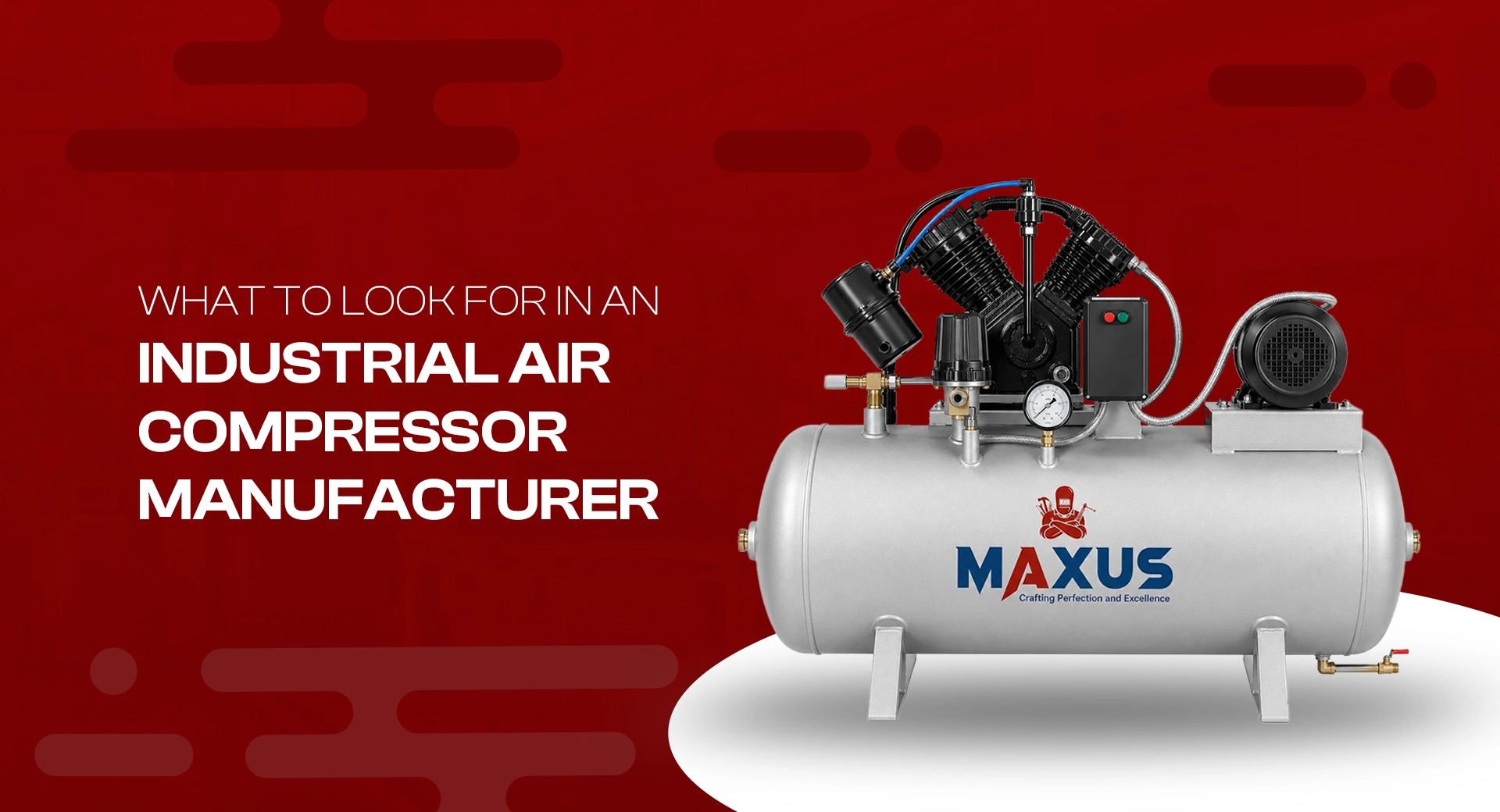
When selecting an industrial air compressor, considerations must include checking models, specifications, and prices. Additionally, the manufacturer of the equipment is also an important consideration; its experience influences the efficiency and reliability of the air compressor, as well as its operating expenses and service life. That is why a reliable manufacturer should have knowledge in various industries, so the equipment they provide will be appropriate for different conditions of usage and will perform well even after installation.
With plenty of Industrial Compressor Manufacturers available nowadays, it is vital to consider more than just the initial cost of the unit. A good manufacturer should combine the quality of engineering with efficiency, customization, as well as top service.
Take a look at the following points before you make your choice.
Manufacturing Knowledge and Industrial Experience
When selecting an Industrial Air Compressor manufacturer, it is important to consider experience. A manufacturer with strong engineering knowledge will likely know what different industries require, including manufacturing, fabrication, heavy engineering, construction, oil and gas, and energy.
It is wise to think about how long the manufacturer has been in business, which industries it works in, and what size of installations it does. This will help you to understand if its equipment has been tested for use in real industry.
The manufacturer with proven technical knowledge will therefore be able to help choose the correct compressor capacity, configuration, and operating specifications, instead of trying to sell you an off-the-shelf machine.
Product Quality and Build
Since industrial compressors often operate for prolonged periods in unfavorable working conditions, the construction quality becomes vital to consider. So prior to making a purchase, it is important to look at the components’ quality, manufacturing, and assembly standards and safety features.
One of the examples of a heavy-duty air compressor is the one that has to endure constant industrial operations while providing stable air supply. The manufacturer must follow proper quality-control practices to ensure that all machines conform to the requirements set.
It is good to remember that certifications such as ISO 9001 suggest that the manufacturer adheres to certain quality-control practices. Nevertheless, apart from the certification, one should also consider real product quality, technical expertise of the manufacturer, and customer service.
Types of Compressors and Their Applicability
Not all compressors can be used in all applications. Before finalizing the manufacturer, it is important to look at its product offerings to determine whether they suit your specific air requirements.
For instance, a Reciprocating Air Compressor can work well for situations that require constant compressed air supply and specific pressure, while some other configurations of compressors may be better suited for a different job.
A competent manufacturer should be able to answer the following questions:
The required air pressure The desired airflow The number of operating hours The duty cycle of the application The environment of the installation The available power supply Space limitations Requirements of the particular application
Using this approach, you can choose the right machine according to the needs of real-life situations, rather than just selecting models with the highest possible performance statistics.
Energy efficiency and operating expenses
The cost of buying an industrial compressor is only a portion of the total expense of ownership. As industrial compressors can use quite a bit of energy while working, energy efficiency plays an important role in such a scenario.
When assessing an energy-efficient compressor, make sure to ask the manufacturer about its energy consumption, efficiency, air delivery system, and how it performs under different load conditions.
A reputable manufacturer will answer all your questions regarding the efficiency data and provide assistance in determining how the device is capable of affecting your overall operational costs.
It is advisable to look at the total cost of ownership, rather than simply the purchase cost. Even if the machine comes at a slightly higher price, it can actually provide better performance in the long run.
Custom Solutions Enablement
Industrial needs differ from one sector to another. Your plant might have specific pressure requirements or constraints of space, or certain operating conditions that do not allow you to make use of a standard configuration.
This is the time to benefit from manufacturing customized air compressors.
A responsible manufacturer should be able to comprehend your problem and advise or create a solution that suits your particular needs. Customization entails configuration, amount of pressurized air produced, controls, installation nuances and many other important aspects.
What is of the utmost importance is that this manufacturing company does not just state that it is capable of customizing products, but it is able to process information received in order to design a solution accordingly.
After-Sales Service and Technical Support
Any compressor, regardless of its durability, requires maintenance and specific help at times. This is why after-sales support is very important when selecting the air compressor supplier.
Find out what support the manufacturer offers before buying the equipment, as it can include:
- Installation and commissioning
- Preventive maintenance
- Repairs in case of breakdowns
- Genuine spare parts
- Technical support
- Service engineers
- Warranty support
- The presence of service regions
Warranty and Reliability
Warranty coverage is an indicator of how trustworthy the manufacturer is. However, duration of warranty coverage is not the only thing to look at.
Analyze the warranty documents thoroughly and figure out which aspects are covered and which are not. It is also important to understand how the manufacturer handles service requests.
A reliable manufacturer should have a clear warranty policy and be readily available to solve any technical issues that arise.
Proven Industrial Applications
To begin with, you should consider the application of compressors in various industries when picking a manufacturer. A manufacturer with wide-ranging experience in businesses such as metal production, heavy engineering, infrastructure construction, energy generation, oil and gas, railway systems, and manufacturing will have a better understanding of the operating conditions for industrial applications.
Client experience will also give you some perspective. Look for references relating to previous installations, loyal customers, and long-lasting product performance.
This will give you information about whether the manufacturer’s experience matches the requirements of your application.
Make the Right Decision for Your Industrial Air Needs
When choosing between Industrial Compressor Manufacturers, it is important to consider various elements such as engineering capability, quality of product, efficient usage of energy, customized design of products, customer support, and long-term usage value. If you need Heavy Duty Air Compressors for your complex applications or a specially designed solution, your choice of manufacturer can determine significantly how your machinery will work in the future.
Before making the final decision, take a full assessment of the following aspects: equipment, people involved into manufacturing, the support system, the capability to meet your demands.
If you prefer high-quality, effective compressed air solutions, feel free to contact the staff of Verotech Industries and get information about their services.
Related Articles
Standard or Heavy-Duty Air Compressor: Which One Does Your Industry Need?
Struggling to compare standard and heavy-duty compressors? Explore how Verotech Industries locks in deals for suitable air compressors in India, ensuring efficiency and results.
How MIG Gas Welders Deliver Cleaner and Faster Welds
Explore how MIG gas welders enhance arc control, welding speed, weld quality, and productivity.